How Long to Rest Between Sets

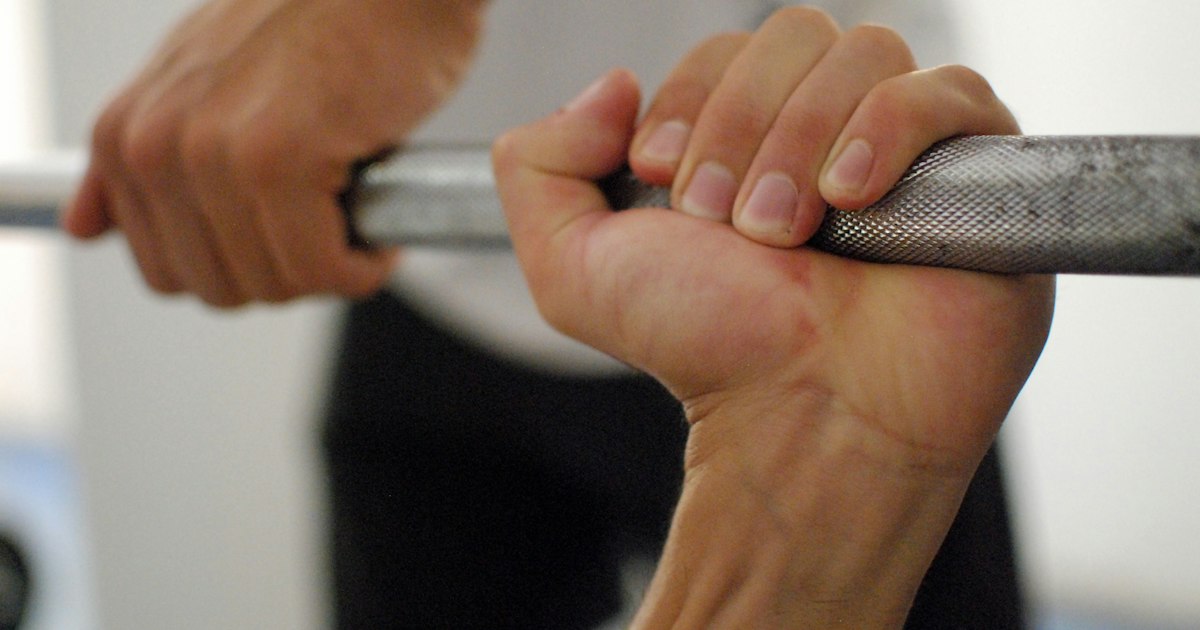
Rest between sets is the most underrated variable of a training program. Some athletes stand at the barbell for five minutes, others cut their pauses to 30 seconds for the sake of the 'pump'. Our editorial team examined what happens in the muscle during the pause and what modern research says about the effect of the rest interval on strength and muscle mass.
What recovers during the pause
During an intense set lasting 20–60 seconds, the muscle draws energy mainly from two sources: the phosphocreatine system and anaerobic glycolysis. Phosphocreatine stores in the muscle cell are small and are depleted within seconds of maximal effort, so it is precisely the speed of their recovery that largely determines how high-quality the next set will be.
The classic work of Harris and colleagues (1976) showed that phosphocreatine resynthesis after exercise is biphasic: the fast phase lasts about a minute, while full restoration of stores takes several minutes. In other words, after a 30-second pause the muscle starts the next set with noticeably incomplete energy reserves.
Besides energy, during rest the concentration of metabolites — hydrogen ions, inorganic phosphate — that impair the contractile apparatus decreases. Blood flow normalizes, heart rate drops, and the excitability of the neuromuscular system is restored. All these processes occur at different speeds.
Subjective recovery also matters: the readiness to psychologically prepare for a hard set. In multi-joint exercises — squats, deadlifts, bench press — central nervous system fatigue and general shortness of breath often become the limiting factor sooner than local fatigue of a specific muscle.
Rest and strength performance
For developing maximal strength the data are fairly unambiguous: longer pauses win. The systematic review by Grgic and colleagues (2018) concluded that to maximize strength gains in trained individuals, intervals of over two minutes are advisable, whereas in beginners the difference between short and long pauses is less pronounced.
The mechanism is simple: with longer rest the athlete performs more repetitions with a given weight or lifts more weight in each subsequent set. The total quality volume of high-intensity work increases, and it is precisely this that is the main stimulus for adaptation of the nervous system and muscles.
An earlier review by de Salles and colleagues (2009) showed that with pauses of 3–5 minutes the number of repetitions across a series of sets is preserved much better than with pauses of up to a minute. With short intervals, performance drops as early as the second or third set, especially in exercises with heavy weight.
The position of the American College of Sports Medicine (ACSM, 2009) recommends rest of at least 2–3 minutes for basic exercises with heavy weight, and allows 1–2 minutes for accessory exercises and lower intensity. These recommendations still remain a reasonable starting point.
Rest and hypertrophy
For a long time bodybuilding held the view that short pauses (30–60 seconds) are better for muscle growth, since they enhance metabolic stress and the acute rise in anabolic hormone levels. However, these short-term hormonal spikes, as it turned out, poorly explain long-term hypertrophy.
In a study by Schoenfeld and colleagues (2016), trained men who rested three minutes between sets gained more muscle thickness in some areas and more strength over eight weeks than a group with one-minute rest. The authors attributed this to the greater training volume performed.
A later meta-analysis using a Bayesian approach (Singer and colleagues, 2024) pointed to a small advantage of pauses over 60 seconds for hypertrophy, whereas further lengthening beyond 90 seconds provided only a negligible additional effect. In other words, it is critically important not to 'strangle' volume with pauses that are too short.
Short intervals nonetheless have their place: they save time and can be appropriate in isolation exercises for small muscles, where systemic fatigue is minimal. They are also useful when the total number of sets is increased to compensate for the reduced performance of each individual set.
How to choose an interval in practice
The optimal pause depends on the goal, the exercise and the level of training. Below are guidelines the editorial team formed on the basis of the reviews and positions of professional organizations cited. These are not rigid norms but ranges within which it is worth experimenting.
| Goal / type of exercise | Approximate rest | Comment |
|---|---|---|
| Maximal strength (1–5 repetitions) | 3–5 min | Priority is the quality of each set |
| Hypertrophy, basic exercises | 2–3 min | Allows weight and repetitions to be maintained |
| Hypertrophy, isolation exercises | 1–2 min | Less systemic fatigue |
| Strength endurance, circuits | 30–90 s | Deliberately elevated metabolic stress |
A convenient practical criterion is how you feel: begin the next set when your breathing has recovered and you are confident you can perform the planned number of repetitions with the given weight. This autoregulatory approach aligns well with research findings.
A few tips to help you use rest time effectively:
- use a timer — subjectively pauses feel longer than they actually are;
- don't get distracted by your phone, so that 2 minutes don't turn into 6;
- combine exercises for different muscle groups (antagonist supersets) to save time without losing quality;
- record the duration of pauses in your training log alongside weight and repetitions.
If a workout is limited in time, it is more rational to reduce the number of exercises than to cut pauses in basic movements down to a minute. For people with cardiovascular diseases, the duration of rest and the intensity should be agreed with a doctor.
Editorial conclusions
Rest between sets is not 'lost time' but part of the training stimulus. Phosphocreatine and the neuromuscular system need several minutes to fully recover after a hard set.
For developing strength, pauses from 2–3 up to 5 minutes work best. For hypertrophy there is no convincing advantage to 'super-short' pauses: moderate intervals that allow volume to be maintained give at least the same result.
The editorial team's practical rule: basic exercises — longer, isolation exercises — shorter, and the main benchmark is the ability to perform the next set with quality.
We also recommend reading our materials on the training log, on the principle of progressive overload and on how to organize supersets without losing effectiveness.
References
- Harris RC, Edwards RH, Hultman E, et al. The time course of phosphorylcreatine resynthesis during recovery of the quadriceps muscle in man. Pflugers Arch. 1976;367(2):137–142.
- de Salles BF, Simão R, Miranda F, et al. Rest interval between sets in strength training. Sports Med. 2009;39(9):765–777.
- Schoenfeld BJ, Pope ZK, Benik FM, et al. Longer interset rest periods enhance muscle strength and hypertrophy in resistance-trained men. J Strength Cond Res. 2016;30(7):1805–1812.
- Grgic J, Schoenfeld BJ, Skrepnik M, et al. Effects of rest interval duration in resistance training on measures of muscular strength: a systematic review. Sports Med. 2018;48(1):137–151.
- American College of Sports Medicine. Position stand: progression models in resistance training for healthy adults. Med Sci Sports Exerc. 2009;41(3):687–708.
- Singer A, Wolf M, Generoso L, et al. Give it a rest: a systematic review with Bayesian meta-analysis on the effect of inter-set rest interval duration on muscle hypertrophy. Front Sports Act Living. 2024.
Andriy Melnyk
A strength-sports coach and author of programs for beginner and intermediate levels. Writes about training planning.